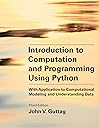
Introduction to Computation and Programming Using Python, Third Edition: With Application to Computational Modeling and Understanding Data
Product ID: 332190374
🐍Python 3.8 mastery
📊Data science tools
📚637 pages of deep learning
€ 110.24
1
Sold byAmazon LatviaDelivered byDesertcartCustomer service byDesertcartReturns14 days · 30 with PRO
Buyer Protection · Full refund if your order doesn't arrive as described.
Desertcart purchases this item on your behalf and handles shipping, customs, and support to Latvia.
Secure transaction
Description
🐍 Unlock the future of coding with MIT’s Python powerhouse!
- MIT CERTIFIED CURRICULUM - Content derived from MIT’s renowned courses ensures top-tier, academically rigorous learning.
- COMPREHENSIVE UP TO DATE - Third edition with expanded chapters on pandas and matplotlib for cutting-edge computational skills.
- MASTER PYTHON FROM SCRATCH - No prior coding? No problem. Start your journey with clear, beginner-friendly lessons.
- INTERACTIVE LEARNING ECOSYSTEM - Access downloadable code, YouTube videos, and GitHub repos to practice and perfect your skills.
- DATA SCIENCE MODELING POWERHOUSE - Harness numpy, pandas, matplotlib, and sklearn to analyze and visualize real-world data.
Introduction to Computation and Programming Using Python, Third Edition, is a 637-page comprehensive textbook from MIT Press designed for beginners and professionals alike. It teaches computational problem solving using Python 3.8 and key libraries like numpy, pandas, matplotlib, and sklearn, focusing on data science, machine learning, and computational modeling. The book is enriched with downloadable code, video supplements, and a strong academic foundation from MIT’s courses, making it an essential resource for mastering Python programming and data analysis.
Specifications
| ASIN | 0262542366 |
| Best Sellers Rank | #171,941 in Books ( See Top 100 in Books ) #244 in Web Programming #373 in Computer Programming Languages #1,202 in Computer Science |
| Customer reviews | 4.5 4.5 out of 5 stars (182) |
| Dimensions | 17.8 x 3.4 x 23 cm |
| Edition | 3rd |
| ISBN-10 | 0262045788 |
| ISBN-13 | 978-0262542364 |
| Item weight | 992 g |
| Language | English |
| Print length | 496 pages |
| Publication date | 5 January 2021 |
| Publisher | MIT Press |
Common Questions
Yes, all products are sourced directly from authorized retailers in the US, UK, UAE and India. We maintain strict quality control processes and verify each product before shipping. All items come with applicable manufacturer warranties and are covered by our standard return policy.
Delivery times vary by destination country, typically ranging from 3-9 business days. Each order is fully trackable through our system. We handle all customs clearance and use reliable courier partners for last-mile delivery. You'll receive regular updates about your order status via email and our app.
Desertcart is an international e-commerce platform operating since 2014. We securely process thousands of orders globally each day. Every product goes through our quality verification process before delivery, and we provide end-to-end order tracking, 24/7 customer support, and a comprehensive returns policy to ensure a safe shopping experience.
Our prices include the product cost, international shipping, import duties, customs clearance, and local delivery charges. We handle all customs and import procedures, ensuring there are no hidden fees upon delivery. PRO members receive additional benefits including free shipping.
Trustpilot
TrustScore 4.5 | 7,300+ reviews
Shop Global, Save with Desertcart
Value for Money
Competitive prices on a vast range of products
Shop Globally
Serving millions of shoppers across more than 100 countries
Enhanced Protection
Trusted payment options loved by worldwide shoppers
Customer Assurance
Trusted payment options loved by worldwide shoppers.
Desertcart App
Shop on the go, anytime, anywhere.